


Master's Standing Orders: Essential Guidance for Safe Navigation and Bridge Watchkeeping
Master's Standing Orders provide clear instructions for bridge officers to maintain safe navigation when the Master is not on the bridge. This article summarizes the key principles, watchkeeping responsibilities, and critical situations in which the Officer of the Watch must immediately notify the Master.
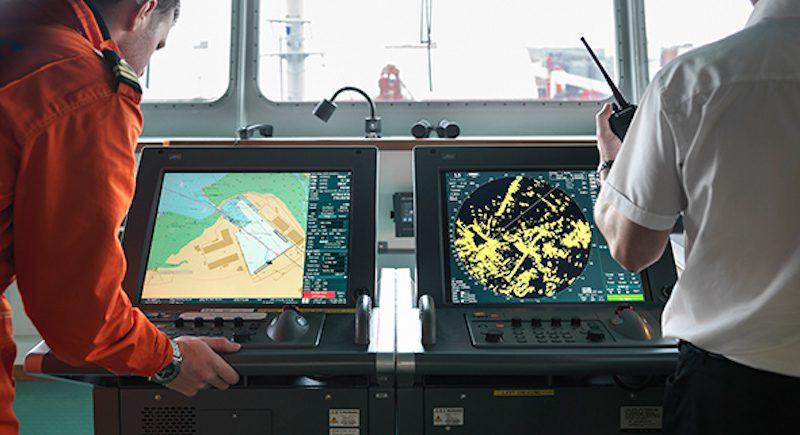
Following the International Safety Management (ISM) Code, which are required safe operating procedures of Sections 5 and 7 on it which refers to the Master's Standing Orders for calling the Master.
The Master of the Ship should created “Master's Standing Orders” Which provide clear instructions from the Captain to the Bridge officers and crew on how to operate the ship safely, especially when the Master is not on the bridge.
The main reasons are:
Safety: They help ensure the ship is navigated safely in all conditions.
Consistency: All officers follow the same procedures and standards.
Decision-making: They tell the officer of the watch when to call the master, such as in poor visibility, heavy traffic, equipment failure, or if there is any doubt about the ship's safety.
Compliance: They help meet the requirements of the International Maritime Organization and the International Safety Management (ISM) Code, which require safe operating procedures.
Emergency preparedness: They provide guidance for responding to emergencies and unusual situations.
Here-under are some Simple key point for “Master's Standing Orders”
- When the ship is at sea or at anchor, Bridge to be maintained at all time
- On duty during take leave for any reason, such as bridge, the officer must shift to another. Shall notify the captain what had happened. Before the shift succession in a safe manner to ensure the succession; successor to take over the former, must be absolutely sure they have the ability to take over in a safe manner. Maintained a good navigation watch
- In addition, according to the shift checklist, shift changes, must continue to ensure safety of navigation on all the relevant information has been prepared and communicated, any defects arise should be informed as soon as possible and when they recovered.
- Any fatigue or illness should notify to mater immediately
- Keep sharp look out and keep CPA follow SMS of company
- Setting and verify alarm of the Ecdis as poster located on the bridge
- To obtain Gyro compass Error at least once every watch
- Frequently plot ship position on the chart and verify by other method
- Poor visibilities
- The following conditions must be immediately called the captain
- Sailing ship traffic density, or other impact of the ship or dangerous
- There is not expected to see land
- Expected to occur on land or logo does not appear;
- Measuring the water depth is not the same with the expected;
- Encounter poor visibility
- Host, rudder, navigation equipment or other essential equipment failures
- Weather changes due to the situation;
- Ship encounter any dangerous hazard, or floating ice, etc;.
- Mooring anchor when drift away
- Discovered fire, people fell into the water or other emergency situations;
- For pilot actions or intentions of doubt;
- Drivers for safe navigation and the navigation of ships when there is any doubt
- In order to ship safety and environmental needs of present, the officer called the captain in such circumstances should be used before the rudder, the host, signals or other similar means to take decisive action, regardless of the above requirements need to call the captain
- Captain on the bridge does not mean that the officer functions are automatically removed. The captain has made it clear that the succession duty only means the transfer of power. Shift must be entered in the logbook .
- Officer must on the bridge should familiazation himself with present situation specially darkness
- Do not hesitate to call Master when you are in doubt,.
These Master's Standing Orders” are in addition to the Rules, regulations policies and laid down by the Company and various National – International bodies to which you must be familiar with .
Final “ Master's Standing Orders” should be have signature of all Deck Officer and Captain
Capt. Truong Van Hung
You might be interested

Auxiliary Engine Turbocharger: Measuring Axial and Radial Clearances
See more


KEY CONSIDERATIONS AND CALCULATIONS BEFORE ANCHORING IN DEEP WATER
Anchoring in deep water requires the Master and deck team to carefully assess the water depth, required anchor cable length, windlass capacity, and loads acting on the anchoring system. This article presents practical principles and calculations for deep water anchoring, together with key considerations during anchoring operations, anchoring large vessels, and anchor watch, with the aim of ensuring the safety of the vessel, equipment, and crew.
See more
NIGHT ORDER BOOK – MASTER’S NIGHT ORDERS AND KEY REQUIREMENTS FOR SAFE WATCHKEEPING (PART 2)
The Night Order Book is an important tool for the Master to communicate specific instructions and safety precautions to the Officers of the Watch during the vessel’s night passage. The Night Order should be regularly updated to reflect the actual voyage conditions, weather, navigational area and operational status of the vessel, while remaining consistent with the Company’s SMS and relevant OCIMF/SIRE 2.0 practices. For LPG/LNG carriers, oil tankers and chemical tankers, particular attention should be given to navigational safety, CPA/TCPA, weather conditions, navigational equipment, cargo operations and other vessel-specific risks. For LPG/LNG carriers, additional considerations may include cargo tank pressure and temperature, the reliquefaction plant, gas detection systems and cargo tank conditions.
See more
SPECIALIZED 4TH ENGINEER TRAINING – PRACTICAL LEARNING, STRONGER SKILLS, GREATER CONFIDENCE ON BOARD
As part of its ongoing commitment to improving the professional competence of Vietnamese seafarers, SUNRISE MANPOWER CO., LTD successfully organized a Specialized 4th Engineer Training Session. The training focused not only on strengthening technical knowledge but also on providing participants with opportunities to work directly with equipment, discuss real-life operational situations, and learn practical experience from experienced Chief Engineers. This training program is one of SUNRISE MANPOWER’s practical initiatives to support seafarers in enhancing their skills, becoming more confident in their duties, and maintaining safe operations on board.
See more


 CONTACT FOR CONSULTATION


