


Sunrise Manpower Co., Ltd Conducts Marine Engineering Technical Training to Enhance Engine Officers' Professional Competence
As part of its ongoing commitment to developing competent and safety-conscious marine engineers, Sunrise Manpower Co., Ltd successfully conducted a Marine Engineering Technical Training Program for engine officers. The training combined technical knowledge, practical maintenance exercises, and operational experience sharing to strengthen participants' engineering competence and promote safe and efficient engine room operations.
Recognizing that technical competence is fundamental to safe ship operations, Sunrise Manpower Co., Ltd. recently organized a comprehensive Marine Engineering Technical Training Program for engine officers. The program forms part of the company's continuous professional development initiative, ensuring that seafarers remain technically proficient and fully prepared to meet the operational requirements of the modern shipping industry.
The training curriculum covered a broad range of essential engineering subjects, including the review and enhancement of technical knowledge relating to marine diesel engines, exhaust gas turbochargers, fuel oil purifiers, air compressors, and marine electrical systems. Participants also received updates on troubleshooting procedures for common machinery failures, preventive maintenance practices, and the latest operational safety requirements applicable to engine room operations.
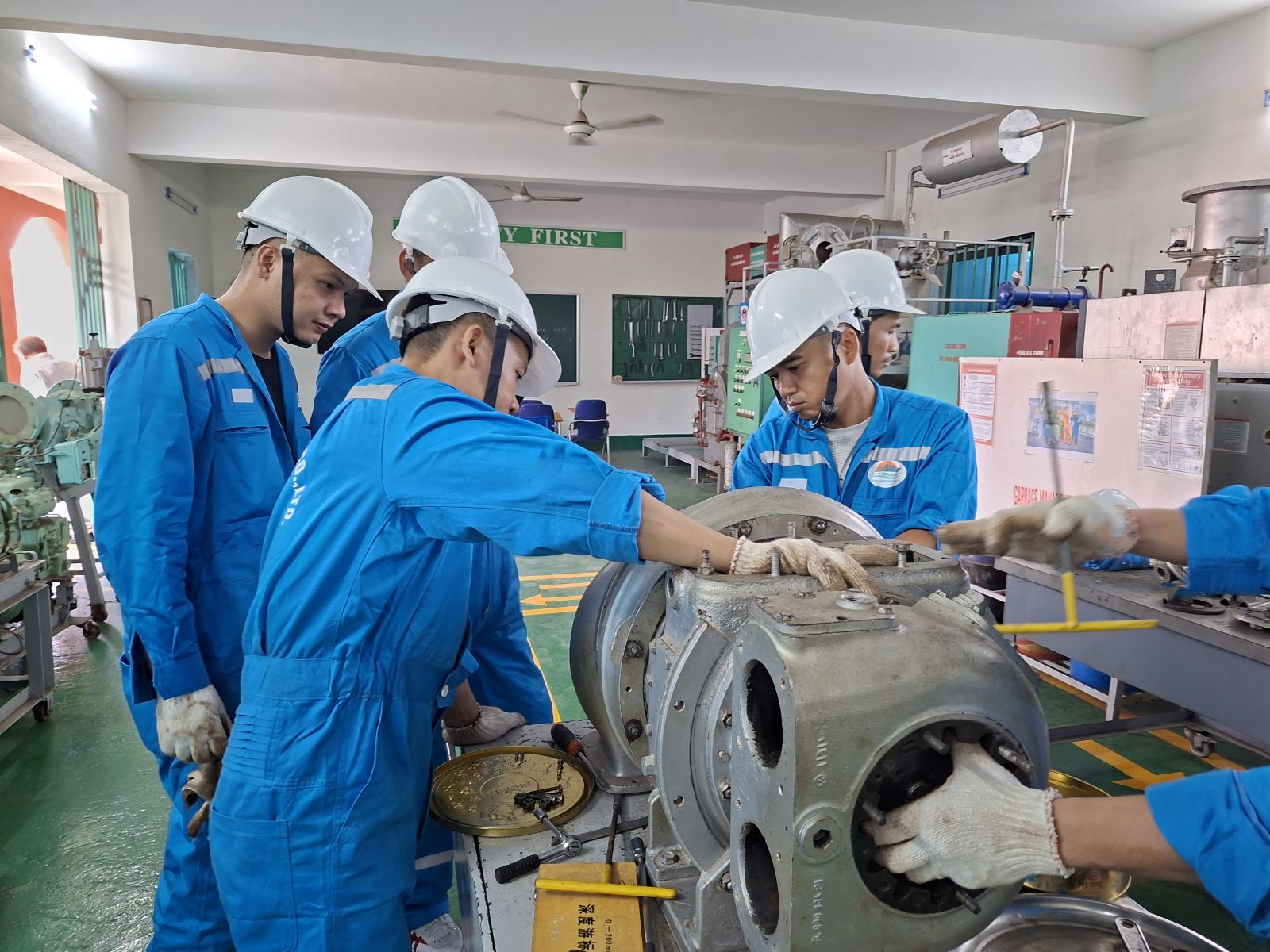 A key feature of the program was its strong emphasis on practical application. Participants engaged in hands-on maintenance exercises using actual machinery and equipment, enabling them to reinforce theoretical knowledge through practical experience. In addition, experienced Chief Engineers shared operational case studies and best practices accumulated from years of onboard service, providing valuable insights into machinery management, fault diagnosis, and effective decision-making under real operating conditions.
The training was primarily designed for newly promoted Third Engineers and experienced Third Engineers seeking to further strengthen their professional competence. Fourth Engineers and Motormen who wished to broaden their technical knowledge and prepare for future career advancement were also encouraged to participate.
Beyond technical instruction, the program fostered professional discussion and knowledge exchange among participants, promoting continuous learning and reinforcing the importance of teamwork, safety awareness, and engineering excellence throughout engine room operations.
At Sunrise Manpower Co., Ltd, we firmly believe that investing in the continuous development of our seafarers is essential to maintaining high standards of safety, operational reliability, and service quality. Through regular technical training and competency development programs, we remain committed to supplying highly qualified, well-trained, and internationally competent marine professionals to our valued clients worldwide.
Sunrise Manpower Co., Ltd extends its sincere appreciation to all instructors, Chief Engineers, and participants whose dedication and active engagement contributed to the success of this training program. We look forward to continuing our mission of supporting the professional growth of our seafarers and contributing to a safer and more sustainable maritime industry.
You might be interested

Protective Shields on Main Engines – Purpose and Differences in Installation
Protective Shields are additional safety devices fitted around the cylinder ends of some MAN B&W ME engines, particularly at Cylinder No. 1 and No. 6. Although they are not standard factory equipment, many shipowners require their installation to protect crew members from high-temperature combustion gases that may escape under abnormal cylinder pressure, especially during main engine starting. The article explains the reason for their installation and why the arrangement may differ between engines of the same type.
See more
Bridge Experience Sharing: Guide to export ENC updates to ECDIS
This guide provides a step-by-step procedure for exporting ENC updates from OneOcean and importing them into the JRC JAN-9201 ECDIS, including the preparation of the USB device, export of ENC update data, installation of the exchange set and verification of the ENC update status. The procedure aims to ensure that the vessel’s Master and Back-up ECDIS are properly and accurately updated with the latest ENC information, supporting safe navigation and effective chart management.
See more
Kinh Nghiệm Thực Tế: 7 Nguyên Nhân Chính Làm Mẻ Cánh Turbine
Mẻ cánh turbine là một trong những sự cố có thể ảnh hưởng nghiêm trọng đến hiệu suất và an toàn khai thác tàu. Bài viết phân tích 7 nguyên nhân chính gây mẻ cánh turbine, hướng dẫn nhận diện các dấu hiệu hư hỏng, xác định nguyên nhân và đề xuất biện pháp xử lý, phòng ngừa theo kinh nghiệm thực tế và khuyến cáo kỹ thuật.
See more
Night Order Book – The Master's Essential Guide for Safe Bridge Watchkeeping
The Night Order Book, also known as the Bridge Order Book, is one of the Master's most important navigational documents for ensuring safe bridge watchkeeping during nighttime operations. Although not explicitly required by the SOLAS Convention, it is developed in accordance with the STCW Code, ISM Code, and the vessel's Safety Management System (SMS). This article explains the regulatory basis, key contents, and practical implementation of the Night Order Book, highlighting its vital role in promoting effective communication between the Master and the Officer of the Watch, enhancing navigational safety, and ensuring compliance with international maritime standards.
See more
Master's Standing Orders: Essential Guidance for Safe Navigation and Bridge Watchkeeping
Master's Standing Orders provide clear instructions for bridge officers to maintain safe navigation when the Master is not on the bridge. This article summarizes the key principles, watchkeeping responsibilities, and critical situations in which the Officer of the Watch must immediately notify the Master.
See more


 CONTACT FOR CONSULTATION


